About the Illustrations
An imaginary illustrator, a real consistent style, and a lot of strange verbs.
Every illustration in this gallery is generated with Midjourney, but they all share the same hand. That hand belongs to Philippa Graystone.
Philippa doesn’t exist. She is an imaginary illustrator — a character invented to inhabit a particular AI style reference. But her work is real, in the sense that it’s reliably hers: same palette, same line, same gentle absurdity from one image to the next. That consistency is what makes a gallery feel like a gallery rather than a search-engine result.
The artist
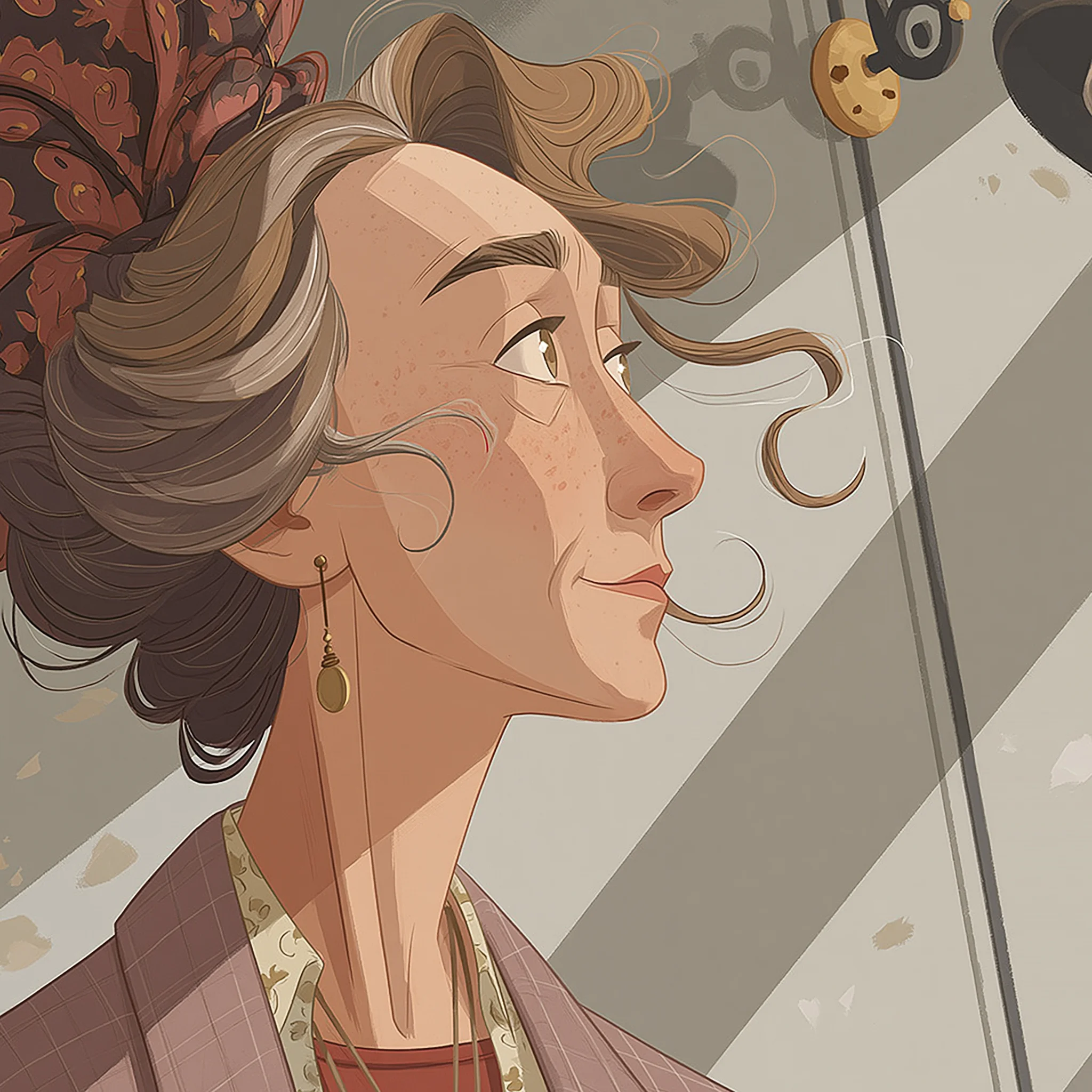
Philippa Graystone
Watercolour and ink illustrator from a small village in the Cotswolds. Studied at the Royal College of Art. Best known for her gently anthropomorphic still lifes — kettles deep in thought, root vegetables on long walks — and for an uncanny ability to make any verb look like an activity she just remembered her grandmother doing.
Imaginary artists, real styles
Every visual style in an image generator — what Midjourney calls a style reference (--sref), what other systems call a LoRA — is, under the hood, just a long string of numbers. But that string of numbers behaves like an artist. It has preferences. It draws certain noses, picks certain greens, lights things from a certain angle. It is, for all practical purposes, a creative personality with no person attached.
So we attach one. Naming a style after an imaginary artist — giving them a hometown, a medium, a temperament — turns a numerical sref into a collaborator you can talk about. It also, we’ve found, helps Claude write better prompts: imagining what Philippa would do is more productive than imagining what --sref 3530551772 would do.
Philippa’s working materials
Format: Wide letterbox panels (2:1), as if torn from a tall picture book.
Palette: Earthy and muted — heather, oat, mustard, slate, the occasional flush of poppy red.
Line: Soft, slightly wobbly, never mechanical. Watercolour wash with ink accents.
Subject matter: Whatever the verb says. Read it generously.
From verb to picture
A single word like Whatchamacalliting doesn’t give the model much to work with. So each verb gets expanded into a small scene through a meta-prompt: who is doing the verb, where, with what props, in what mood. Philippa’s style reference then takes that scene and renders it as if she’d found a quiet afternoon and a fresh box of paints.
Most verbs get more than one rendering. A verb like Wandering can be a person on a hill, a snail on a flagstone, a thought leaving a head. The gallery keeps the variants that feel right and quietly forgets the ones that don’t.
Why this, and not something else
Claude Code’s thinking-spinner verbs are charming on their own. But the charm is fleeting — they flash by while you’re waiting for an answer, and you mostly read past them. Pinning each verb to an image gives it somewhere to land. It’s also a small act of generosity toward the team that wrote the verb list, who clearly enjoyed themselves.
New verbs and new illustrations are added as they arrive. If a verb you’ve seen in the wild is missing, that just means Philippa hasn’t got round to it yet.